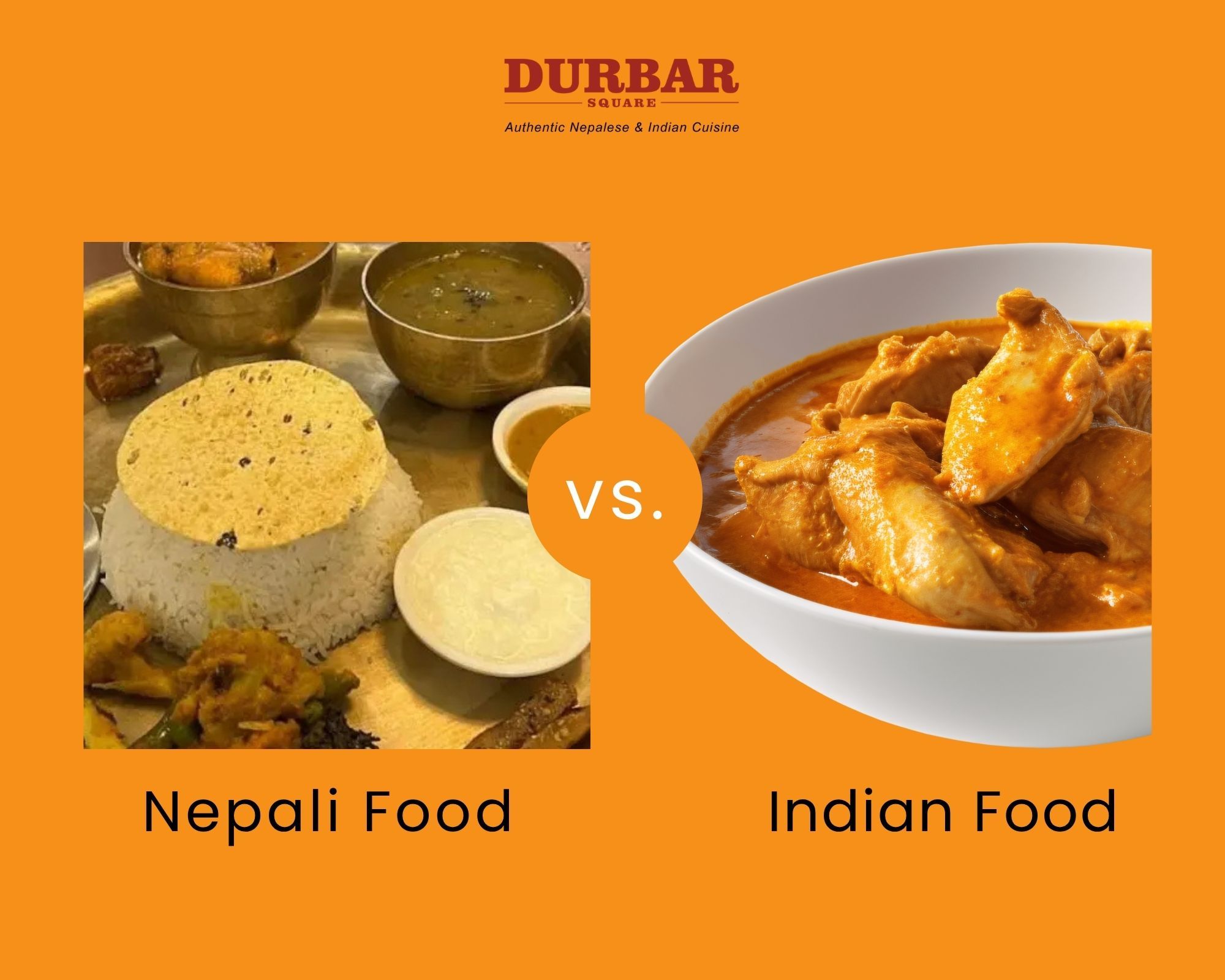
You walk into a restaurant. The menu has curries, lentils, rice, and dumplings.
You think, “This looks like Indian food.” But something is different. The flavours feel lighter. There’s a smoky warmth in the air. And there’s a dish on the menu you’ve never seen before.
Welcome to Nepalese cuisine.
Many diners in Manchester assume the difference between Nepalese and Indian food is small. Maybe just a different spin on curry.
But that’s not quite right. Nepalese food has its own identity, rooted in Himalayan culture, mountain traditions, and a distinct approach to spices and cooking.
If you’re curious about what makes Nepalese cuisine unique, this guide is for you.
It’s an honest mistake. Nepal and India share a long border. Both cuisines use rice as a staple. Both reach for cumin, turmeric, coriander, garlic, and ginger.
And when South Asian restaurants first began opening across Britain, many Nepalese restaurants marketed themselves as Indian to attract diners already familiar with curry culture.
So the two got blended together in the public mind.
There are also visual overlaps. A plate of Nepalese dal bhat and an Indian thali can look similar at first glance. Both feature rice, lentils, and side dishes. Both have chutneys and pickles on the side.
But the moment you take a bite, you start to notice the differences. The spice balance is different. The texture is different. The overall feeling of the meal is different.
As we know, Nepal is surrounded by two big countries: India to the south and Tibet and China to the north. That geography has influenced everything, including the food.
High-altitude living means comfort is key. Warming, hearty, filling meals that keep you going through cold mountain mornings. Traditional Nepalese cooking draws from Tibetan and Himalayan culinary traditions, using fermented ingredients, fresh herbs, and homemade achar (pickle) to build flavour from the ground up.
Unlike many British-style Indian curries, which are often rich with cream and butter, authentic Nepalese food tends to be lighter. Less oil. No heavy cream sauces. More focus on the natural flavour of ingredients.
The flavour themes you’ll notice most in Nepalese cuisine are:
These characteristics give Himalayan food a personality that is comforting yet vibrant. Familiar yet completely its own.
Here’s a straightforward comparison to help paint the picture:
| Nepalese Food | Indian Food |
| Himalayan and Tibetan influence | Strong regional Indian influences |
| Lighter, less creamy dishes | Often richer and sauce-heavy |
| Smoky grilled meats are a highlight | Curry-based dishes dominate |
| Uses achar and fermented flavours | Wider use of masalas and gravies |
| Simple, comforting style meals | Broader spice complexity |
Nepalese food is flavourful, not just hot. The spice profile tends to be more balanced and layered, rather than overpowering. A key ingredient you’ll find in authentic Nepalese cooking is Timmur (also called timut or timur pepper).
It’s native to Nepal and grows in the Himalayan forests. Timmur has a citrusy, slightly numbing quality on the tongue — similar to Sichuan pepper, but earthier and more complex. You won’t find it in Indian cooking.
Indian cuisine, by comparison, often builds heat and depth through layered masalas. Spices like hing (asafoetida), mustard seeds, and curry leaves are common. The spice journey in Indian food can be more dramatic and varied by region.
Nepalese cooking leans toward simpler methods. Boiling, steaming, light frying, and charcoal grilling are all common. Traditional dishes are often prepared over wood fires or in clay pots, which gives them a gentle smokiness that is very hard to replicate with modern appliances.
Indian cuisine is famous for its complexity of technique. Tempering, marination, slow cooking, and roasting in a tandoor oven all play major roles. Each method is designed to draw different flavours out of the spices.
This is one of the clearest differences. Nepalese cooking relies heavily on achar– homemade pickles and chutneys that are sharp, tangy, and sometimes fiery. These aren’t an afterthought. They’re an essential part of every meal.
Fermented foods also play a big role. Gundruk (fermented leafy greens) and kinema (fermented soybeans) are Nepalese preservation techniques you won’t find in Indian kitchens.
Nepalese curries exist, but they’re typically lighter than their Indian counterparts. Less cream, less butter, and a greater focus on the natural flavour of vegetables and meat. The sauces tend to be thinner and brothier.
Indian curries are famous worldwide for their richness. Butter chicken, rogan josh, and korma all have thick, layered sauces built through complex spice combinations and cooking techniques.
Nepal has Thukpa, a warming Himalayan noodle soup with Tibetan roots. It has no real Indian equivalent. The broth is gentle, the noodles are hearty, and the whole bowl feels like a hug from the mountains.
India has a huge variety of rice-based dishes and breads across its many regions. The diversity is extraordinary. But the specific comfort-food culture of Nepal, shaped by altitude and Himalayan traditions, stands apart.
If you try only one Nepalese dish, make it momos. It is top nepali comfort food that you can enjoy at your home or any Nepalese restaurant over Manchester. These handmade dumplings are the heart of Nepalese street food culture. The dough is simple but the filling is where the magic happens. Minced chicken, vegetables, or buffalo meat, seasoned with garlic, ginger, and spices.
Momos can be steamed, fried, or served “kothey” style, pan-fried on one side and steamed on the other. They’re always served with momo achar, a tomato-based dipping sauce made with sesame, chilli, and sometimes Timmur for that citrusy tingle.
They look a bit like Chinese dumplings, and there’s a reason for that. Momos have Tibetan roots, which shows you just how wide Nepal’s culinary influences run. What makes them distinctly Nepalese is the spice blend and the achar they’re paired with.
Sekuwa is Nepal’s answer to barbecue. Meats; usually chicken, goat, or buffalo, is marinated for hours in a blend of mustard oil, Timmur, ginger, garlic, cumin, and yogurt. Then it goes onto skewers over a charcoal fire.
The result is smoky, juicy, and deeply flavourful. It’s rustic in the best possible way. No fussy sauces. Just fire, spice, and really good meat. Sekuwa is traditionally served with chiura (beaten rice) and a sharp tomato or radish achar on the side.
Nepal’s national dish and daily staple. As the saying goes in Nepal: “Dal bhat power, 24 hours.”
Dal bhat is steamed rice (bhat) served with a lentil soup (dal) and a variety of accompaniments like vegetable curry, pickles, yogurt, and papad. It sounds simple. And it is. But every kitchen, every village, every family makes it a little differently.
The lentils are gently spiced with turmeric, cumin, and coriander. The rice is fluffy and neutral. The sides add contrast and brightness. It’s a perfectly balanced meal, designed to fuel mountain trekkers and city workers alike.
Thukpa is a Himalayan noodle soup that originated in Tibet but has become a beloved part of Nepalese cuisine, especially in the mountain regions. Thick egg noodles sit in a clear, warming broth with vegetables, meat, and gentle spicing.
It’s the kind of dish that makes you feel grounded and warm. There’s nothing quite like it in Indian cuisine. If you’ve never tried it, Thukpa is a great first step into understanding how Nepal’s northern influences shape the food.
Don’t confuse this with your local Chinese takeaway’s chow mein. Nepalese chowmein is a street food staple that has taken on a life of its own. Stir-fried noodles cooked with onions, cabbage, green peppers, eggs or meat, and Nepalese spices.
It’s punchier and spicier than most Chinese versions. The mustard oil base gives it an earthy depth. And the Timmur-based seasoning adds that signature Himalayan kick. In Nepal, it’s eaten fresh from roadside stalls across Kathmandu. In Manchester, it’s becoming a favourite for those who want something familiar but completely different.
By the way, you can check our menu list to get most of these food in our authentic nepalese and indian restaurant.
This is probably the most common question from first-time diners.
The honest answer is: Nepalese food is flavourful, not just hot. Spice is used to build depth and warmth, not to overwhelm your palate.
That said, heat is present. Fresh chilli, dried red chilli, and Timmur all contribute warmth in different ways. But unlike some regional Indian cuisines that are built around intense heat, Nepalese cooking tends to balance the spice against fresh herbs, tangy pickles, and cooling yogurt-based sides.
Ingredients like sesame, garlic, ginger, and mustard oil add richness and body without adding burning heat. The achar served alongside dishes often has a sharp, tangy kick that complements rather than overwhelms.
Most dishes at a good Nepalese restaurant can also be adjusted for spice preference. So whether you like things mild or fiery, there’s something for you.
If you’re wondering what Nepalese food tastes like overall? Think warming and earthy, with bright pops of citrus and tang from the pickles. Smoky when the grill is involved. Comforting and generous in the way that only mountain food can be.
Manchester has always had an adventurous food scene. Curry Mile on Wilmslow Road is famous across the country. But in recent years, diners have started looking beyond the familiar. They want to know where the food comes from, how it was cooked, and what makes it different.
Nepalese cuisine fits that appetite perfectly.
The growing Nepalese community in the UK has helped bring authentic recipes and traditional cooking techniques to cities like Manchester. And as food culture has shifted towards regional, honest, and story-driven dining, Himalayan food has found its moment.
Momos have become a social food. It offer something to share, something to talk about. Sekuwa has caught the attention of people who love grilled food and want something beyond a standard tandoori. And the communal nature of Nepalese dining, where dishes are shared and meals are unhurried, fits perfectly with how Manchester people love to eat.
The rise of Nepalese restaurants across South Manchester, particularly in Didsbury, reflects a genuine and growing appetite for something real, different, and deeply satisfying.
If you’re exploring Nepalese cuisine for the first time, or you’re a regular who wants to go deeper into the flavours, Durbar Square in Didsbury is worth your time.
Located on Wilmslow Road, Durbar Square serves a menu that blends traditional Nepalese dishes with classic Indian favourites. The kitchen is led by Chef Hom Nath, who brings over 13 years of experience across restaurants in both Kathmandu and Manchester.
The momos here are made the traditional way. They are soft, generously filled, and served with house-made tomato achar. The Gorkhali lamb is slow-cooked and deeply spiced. The Thukpa is warming and honest. And the menu includes plenty of options for vegetarians, vegans, and those who prefer milder spicing.
It’s the kind of place where the food does the talking. Whether you’re new to Nepalese cuisine or returning for familiar favourites, Durbar Square offers an experience that feels both authentic and welcoming.
For diners looking beyond standard curry houses, this is a good place to start.
Both cuisines deserve respect. Indian food is one of the most diverse and complex culinary traditions on the planet, shaped by dozens of regional cultures, centuries of history, and an extraordinary depth of spice knowledge.
But Nepalese cuisine is its own thing. Rooted in Himalayan geography, Tibetan influence, and mountain comforts, it offers something that feels deeply human warming, honest, and generous.
The smoky char of sekuwa. The satisfying simplicity of dal bhat. The doughy joy of a perfectly steamed momo dipped in fiery achar. These are flavours that tell a story about where they come from.
If you’ve never explored authentic Nepalese food, now is a good time to start. And if you’re in Manchester, you don’t have to travel far to find it.
Come with an open mind and a good appetite. That’s all you need.
Ready to experience authentic Nepalese flavours in Manchester? Visit Durbar Square in Didsbury and discover what makes Himalayan food so special — one momo at a time.

