Have you ever visited a restaurant, ordered a dish that sounded delicious, and been left disappointed? Instead of the rich, authentic flavours you expected, it tastes overly sweet, too sour, or simply lacks the homemade warmth you were hoping for. You leave feeling unsatisfied, still hungry, and wondering why you paid for a meal that didn’t live up to its promise.
That’s the reason why we made this guide. By the end of it, you will know how to find a Nepalese restaurant. You will know what Nepalese food is supposed to taste like. You will know which dishes to try. No more guessing.
A real, authentic Nepalese restaurant is not about how fancy it looks. It is about what’s happening in the kitchen. A real Nepalese restaurant cooks like families in Nepal have been cooking for a long time.
Here is what to look for:
The food is only as good as the person who prepared it. The chef at Durbar Square in Didsbury, Manchester, has a long history of cooking. He learnt to cook in Nepal and Manchester. It makes a difference.
Not all Nepalese dishes are prepared in the same way. While some kitchens use fresh, traditional ingredients, others use pre-made alternatives to save time. The table below summarises the key differences and explains why authentic ingredients have such a significant impact on flavour and quality.

| Homemade Ingredients | Store-Bought Shortcuts |
|---|---|
| Freshly ground herbs and spices result in richer, more authentic flavours. | Pre-made spice mixes often lack freshness and depth. |
| Homemade achar delivers a vibrant taste using natural ingredients. | Bottled pickles and sauces may contain preservatives and offer less authentic flavours. |
| Pure, traditional ghee adds a rich aroma and authentic taste. | Cooking oils provide convenience but lack the same depth of flavour. |
| Fresh ingredients are prepared from scratch. | Ready-made pastes and processed ingredients prioritise speed. |
| Every meal reflects traditional cooking methods and homemade quality. | Shortcuts can compromise flavour, texture, and authenticity. |
Nepalese cuisine tells a story. It is shaped by the Himalayas and influenced a little by India and Tibet but is still completely its own thing. It is built around comfort, sharing, and family food that is meant to be eaten together, not rushed through.
A few reasons it is worth your attention:
Once you understand what real Nepalese food is meant to taste like, you will never settle for a watered-down version again.
Experience the Real Taste of Nepal
From handmade momos to flavourful curries, Durbar Square brings authentic Nepalese cooking to Manchester. Join us for a memorable dining experience crafted with tradition and care.

Here is a simple checklist you can actually use next time you’re deciding where to eat:
Ask anyone who grew up eating Nepalese food, and they will tell you that the first thing they look for is dal bhat. If the lentil soup tastes thin and the rice is an afterthought, it is usually a sign that the kitchen isn’t serious about Nepalese cuisine. The best Nepalese restaurant in any city serves dal bhat as if it were the main event, which it is in Nepal; it is the meal that most Nepalese families eat at least once, if not twice, per day.
When you are trying to find a place to eat, there is something you can do that works everywhere, not just in Nepal. Look at the people who are eating at the restaurant. If you see a lot of families and people who go there all the time, that is a really good sign. It is a better sign than just looking at nice pictures on the menu. A restaurant that is filled with Nepalese families and regulars is a place to eat.
Want to see exactly what a proper thali is supposed to include? We have written a full breakdown of what Thakali Thali is, which is widely considered one of Nepal’s most complete traditional meals.

If you are new to Nepalese cuisine, here are the best Nepalese dishes worth ordering first, the dishes that make up the food any newcomer could ask for:
You will find all five on our food menu, and if you want the fuller list, we have rounded up 10 Nepalese dishes every food lover should try at least once.
If it is your first time trying Nepalese food, start with momo and dal bhat. They are easy to love, not too spicy, and give you a real feel for what the cuisine is all about.
Already a fan? Push a little further with sekuwa or a rich Gorkhali-style lamb dish for a bolder, smokier taste of authentic Nepalese cooking. If you really want to impress your taste buds, ask if the restaurant does a Newari khaja set, a traditional platter from the Kathmandu Valley featuring beaten rice, spiced meat, and pickles, showing off just how varied real Nepalese cuisine can be. Pair any of it with something from our drink menu to round out the meal properly.
Some restaurants just put a Nepalese name on an Asian menu, and that is it. Here is how you can tell if the food is good Nepalese food or just a mix of things pretending to be Nepalese food:
If a menu feels like it was designed to please everyone rather than represent Nepal, that’s usually your answer.
Finding great Nepalese food near you doesn’t have to be a guessing game. Try this:
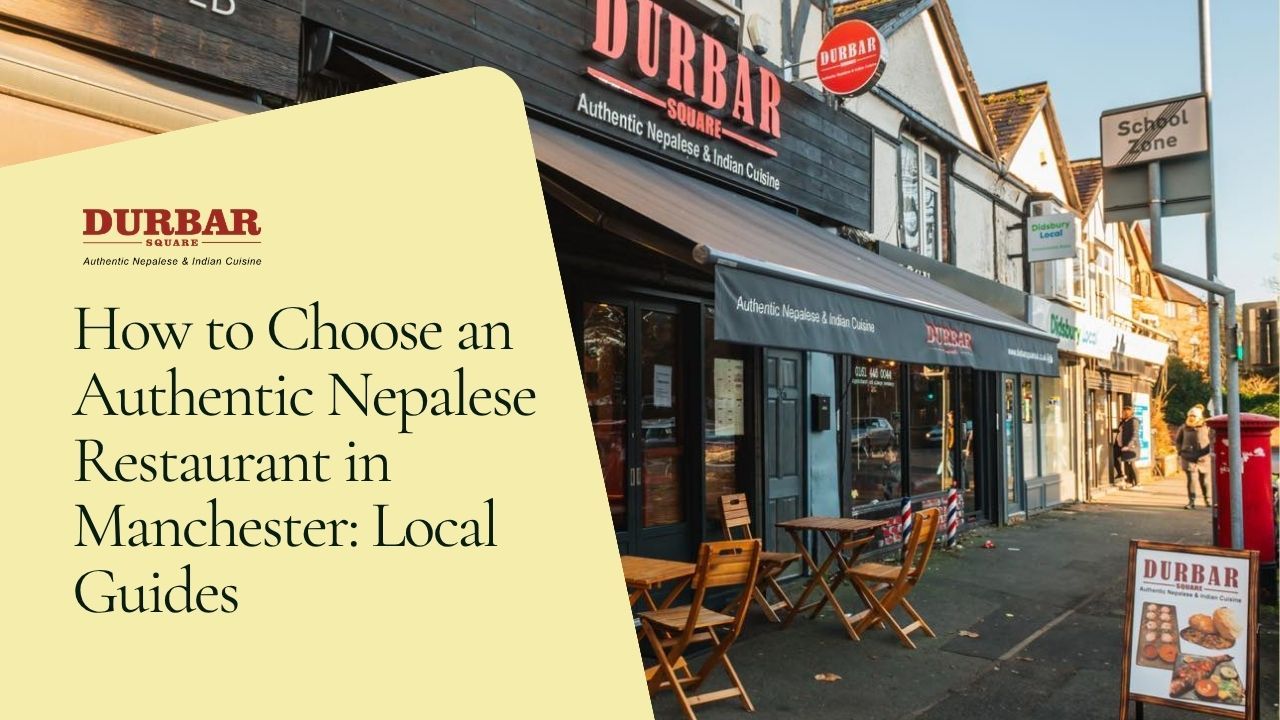
If you are in Manchester, Durbar Square in Didsbury ticks every one of these boxes; it is a family-style authentic Nepalese restaurant led by a chef with real roots in Nepal, serving proper dal bhat, momos, sekuwa, and thukpa, right on Barlow Moor Road.
Finding food is not just about eating a good meal. It is also about helping the culture and real people who have worked hard for years to perfect their cooking. Nepalese food is about recipes that have been passed down.
When you are deciding where to eat, use this checklist. You should trust your senses. Do not settle for a copy of food when the real Nepalese food is out there.
If you love Indian food too, our guide on how to choose an authentic Indian restaurant covers the same kind of checklist for that cuisine. You will find plenty more like this over on our blog.
If you are near Manchester, come taste it for yourself. Durbar Square, led by Chef Hom Nath, serves genuine Nepalese and Indian dishes in the heart of Didsbury, from handmade momos to a proper dal bhat thali.
Ready to Experience Authentic Nepalese Cuisine?
Visit Durbar Square and enjoy freshly prepared Nepalese dishes made with traditional recipes, fresh ingredients, and authentic Himalayan flavours.
Momo and dal bhat are excellent choices for beginners. They are comforting, flavourful, and typically mild, making them a great introduction to authentic Nepalese cuisine.
Look for experienced Nepalese chefs, handmade momos, homemade achar, and a traditional dal bhat thali served with its full selection of accompaniments rather than just rice and lentils.
No. Nepalese cuisine is known for its warm, aromatic spices rather than intense heat. While some dishes, such as sekuwa, can be spicy, many are mild and full of balanced flavour.
Nepalese cuisine features balanced spice blends and Himalayan influences, while Indian cuisine often uses richer, more complex curry bases. Both are flavourful but have distinct cooking styles and tastes.
If it’s your first visit, start with handmade momos, followed by a traditional dal bhat set or thukpa. These classic dishes showcase the flavours and cooking techniques that define Nepalese cuisine and are commonly recommended for first-time diners

