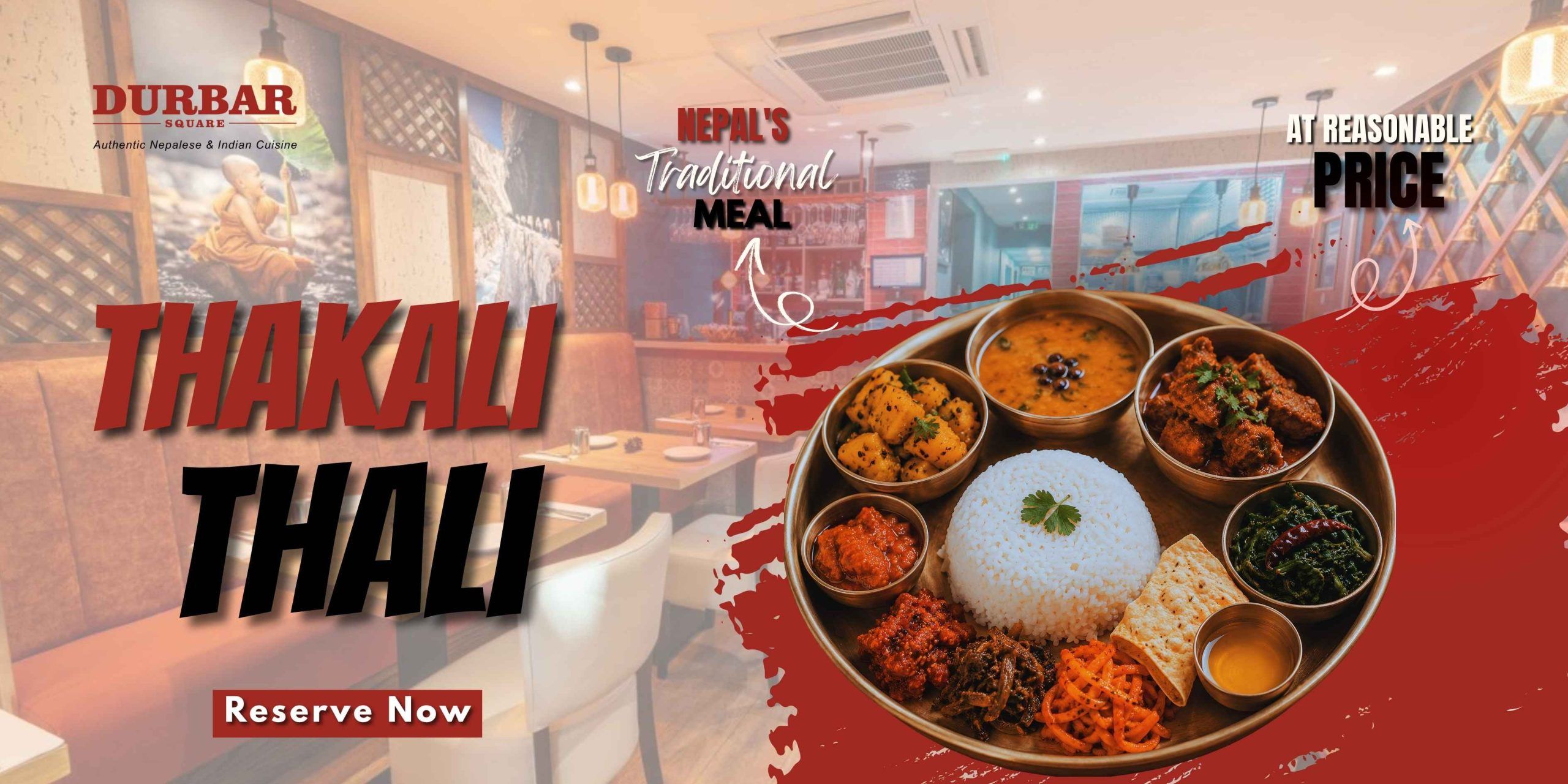
You’re in a restaurant in Manchester, trying to choose what to eat from the menu; however, you’re looking for something comforting, filling, and varied in flavor. You want a whole course instead of a separate dish, and here’s where Thakali Thali comes in.
This meal is served on a traditional round brass plate, combining an entire meal into one perfectly composed dish. In the middle of the dish, you will find steamed rice with melted ghee, surrounded by smaller plates containing other dishes, including lentil soup, spicy chicken curry, sauteed vegetables, pickles, and vegetable curry.
This meal is unique because it combines many different flavors. Each dish has its own distinctive taste, and you can layer different flavors to create your own experience, going from mild to spicy.
Thakali Thali is considered to be Nepal’s most complete traditional meal.
Often described as Nepal’s most complete traditional meal, it’s easy to see why once you experience it. If you’re new to Nepali cuisine, you may also want to explore some of the other popular dishes served across the country in our guide to the best Nepalese dishes in Manchester.
A Thakali Thali is a traditional Nepali set meal originating from the Thakali community in Nepal’s Mustang region. It typically includes rice, lentil soup, vegetables, pickles, curry, and various side dishes served together on one plate.
Unlike a basic plate of dal bhat, a Thakali Thali is a carefully structured meal. Every component is chosen to complement the others in terms of flavor, texture, and nutrition. Rice sits at the center. Dal is poured over it. Small bowls of curries, greens, and pickles are arranged around the edges. Nothing is random. Everything has a purpose.
The word “thali” simply means plate in Nepali. But what sets a Thakali Thali apart is not the plate itself. It is the tradition, the precision, and the generosity behind what gets placed on it.
A proper Thakali Thali includes between six and ten components. Refills are expected, and offering them is part of the hospitality. In Nepal, a guest who leaves a Thakali table hungry is considered an oversight, not an option.
The Thakali Thali takes its name from the Thakali people, a community native to the Thak Khola Valley in Mustang district, western Nepal. Their homeland sits in one of the deepest river gorges on earth, the Kali Gandaki, which runs between the Annapurna and Dhaulagiri mountain ranges.
The Kali Gandaki River has long served as an important link between Tibet and Nepal. The Thakali merchants transported salt from Tibet to the south and returned to the plains of Nepal with rice, dal, spices, and other goods. Thus, cultural exchange between the Himalayan people and South Asians has influenced their culinary practices. Thakali cuisine is at the crossroads of these two cultures.
Because Mustang is extremely cold, Thakali traders would descend to lower towns during winter and open small eateries called bhattis. These were simple inns where travellers could eat, rest, and stay overnight. The food served in bhattis became famous across Nepal for one reason: it was exceptionally clean, consistent, and generous.
The reputation always kept its roots. The Thakali community became famous for being a hospitable community, Their culinary traditions remain an important part of Nepal’s food culture today, alongside other regional specialties such as Momo, Nepal’s most popular dumpling.
Experience the Heritage of Thakali Thali at Durbar Square
Now that you know the origins of Thakali Thali and its deep roots in Nepal’s Thak Khola region, why not experience this iconic meal for yourself? At Durbar Square, we prepare authentic Thakali Thali using traditional recipes and carefully selected ingredients to bring the true flavors of Nepal to your table.
Now that you understand what makes Thakali Thali special, let’s look at what actually comes on the plate.
A full Thakali Thali is a carefully balanced meal made up of several distinct dishes, each with its own role in creating flavour, texture, and satisfaction. It is not random it is thoughtfully designed so every item complements the others.
Here is what you will typically find on a traditional Thakali Thali:
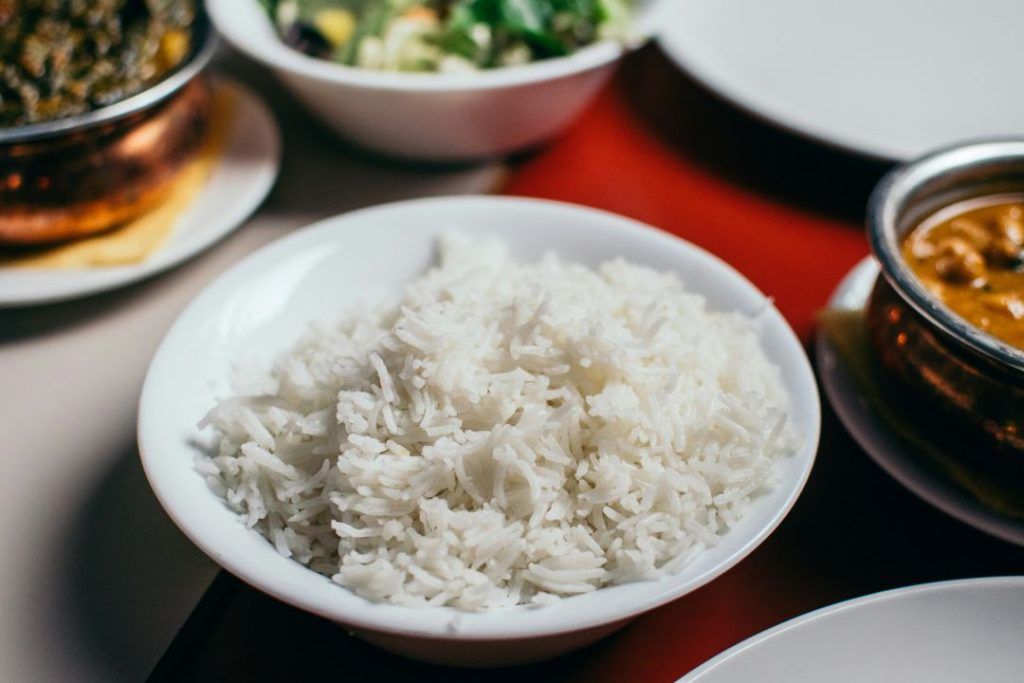
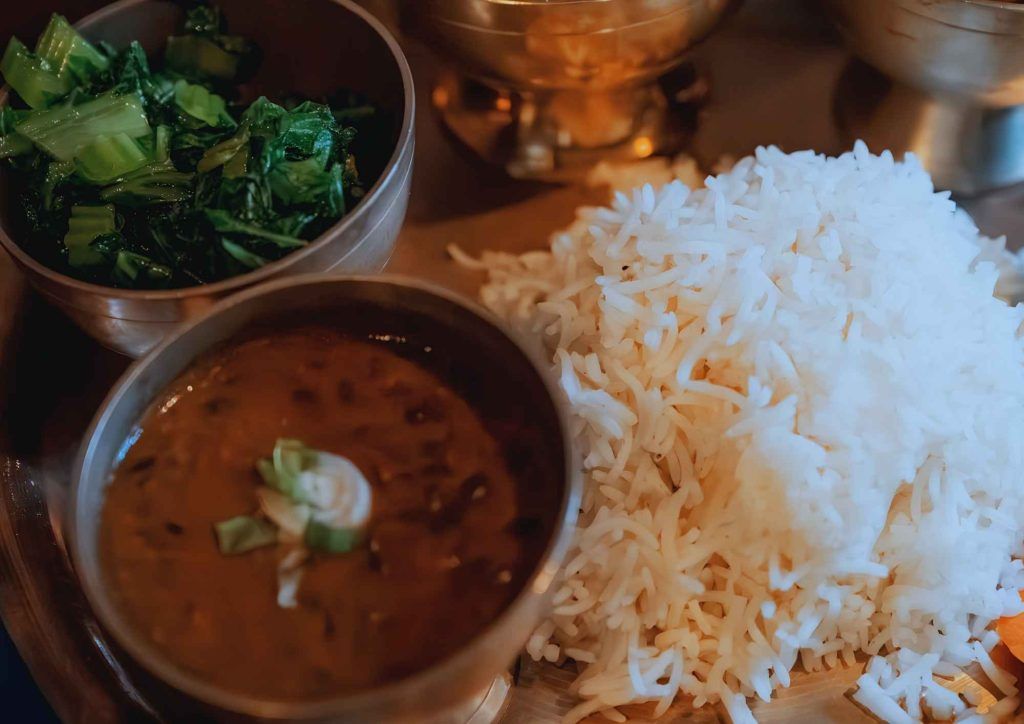
Steamed white rice is the foundation of the thali. It sits at the centre of the plate and serves as the base for everything else. In some traditional settings, dhido is offered as an alternative. Dhido is a thick, firm porridge made from buckwheat or millet flour, stirred over heat until dense and smooth. It is the older mountain staple that predates rice in Thakali cooking and is still served in traditional homes and specialist restaurants today.
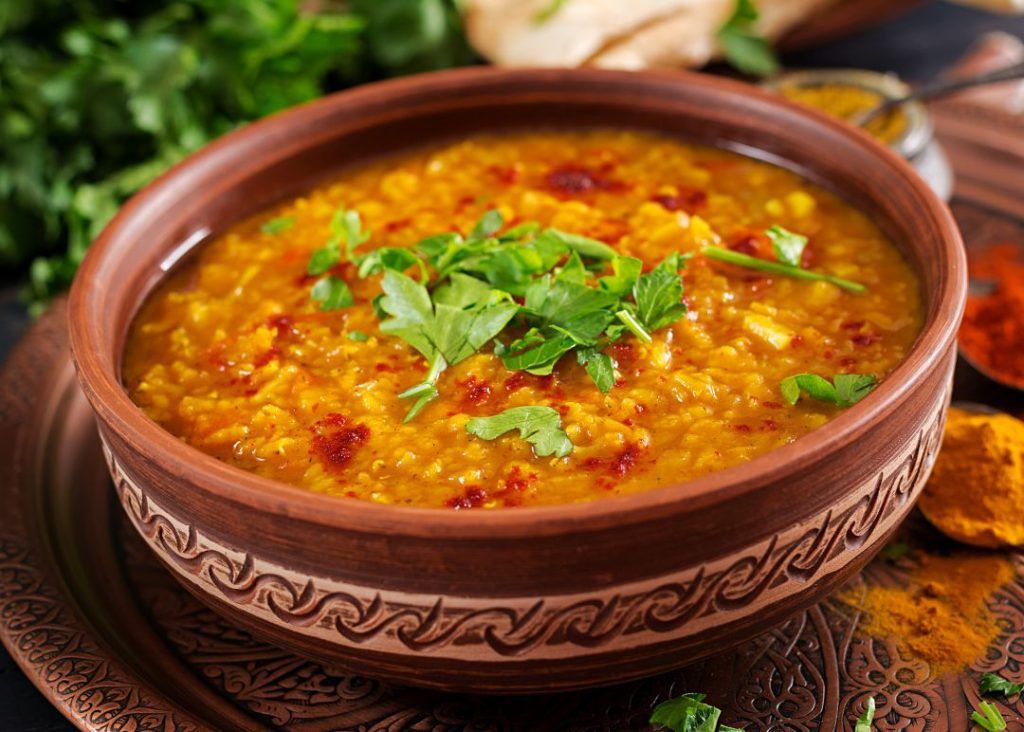
Thakali dal is what makes this meal immediately recognisable. It is thinner and more aromatic than the lentil soups found elsewhere in South Asian cooking. Black lentils or red lentils are simmered with garlic, ginger, turmeric, and fenugreek. Then comes the defining step: a small ladle of ghee is heated, dried jimbu is dropped in, and the whole thing is poured over the dal just before serving.
Jimbu is a wild Himalayan herb with an aroma somewhere between onion and chive. It is not used in everyday Nepali cooking outside the Thakali tradition. That fragrance, rising from the bowl when the tempering hits, is the smell that Nepalis living abroad associate most strongly with home.
The Thakali Thali comes with one or two vegetable tarkari. The potato with timur is one of the best-known vegetables in this dish. Timur is Sichuan pepper used in Nepal. This spice creates a feeling of citrus and tingling in your mouth. Some other vegetables used include cauliflower, beans, pumpkin or whatever is available in that season.
The vegetables are lightly cooked to retain their natural texture. Nothing is overcooked or oversauced. The goal is balance, not heat.
This is where Thakali Thali separates itself most clearly from ordinary dal bhat. A proper thali includes two or three types of achar served at the same time.
Tomato achar is one of the most common types which are roasted and crushed with timur, dried chillies, and salt to create a spicy, smoky paste. Radish achar is created from white radishes mixed with mustard oil, fenugreek, and vinegar. The gundruk achar is derived from gundruk, which are dried and then rehydrated mustard or radish leaves. It is known for its sour taste.
The pickles are not decorative. They are essential to the meal’s flavour architecture.
Spinach, mustard leaves, or fenugreek greens are stir-fried simply with garlic, dried red chilli, and a small amount of mustard oil. Saag adds bitterness and iron to the plate, balancing the richness of the dal and the curry. In the Mustang region, wild greens collected from hillside fields were historically used.
Ghee
A spoonful of ghee is added directly onto the rice or dal prior to consumption. Ghee is not only used for preparing food in the Thakali cuisine; ghee has symbolic meaning too. Its richness in the rice influences the overall consistency and taste of the dish. It is a small feature, which creates an immediate effect.
In the case of non-vegetarian thalis, the meat curry is the main course of the meal. The meat is slowly prepared with Himalayan herbs and carefully chosen spices. In contrast to spicy Indian dishes, Thakali meat dishes are rich, yet not too spicy. Spices help reveal the taste of the meat, rather than hide it. Chicken or lamb/mutton can be selected.
Both Thakali Thali and Dal Bhat are based around rice and lentils. If you have never eaten either, they might look similar at first glance. But the difference becomes clear the moment food arrives.
Dal Bhat is everyday meal for nepalese, which can be cooked quickly at home, served with one vegetable curry and one pickle, and eaten twice a day across the country. It is comforting, filling, and simple. It varies by household, by region, and by whatever ingredients are available that day.
Thakali Thali is a structured, restaurant-grade version of the dal bhat, elevated with discipline and tradition. In dal bhat, you get one pickle, whereas Thakali gives you three. Where dal bhat includes one tarkari, Thakali includes two or three. The dal itself is different: thinner, more aromatic, finished with the jumbo tempering that you will not find in a standard household. Ghee is served deliberately. Refills are offered. Every element is considered.
| Aspect | Dal Bhat | Thakali Thali |
|---|---|---|
| Style of Food | Simple home-style cooking | Refined traditional dining experience |
| Preparation | Everyday household meal | Carefully prepared with attention to balance and presentation |
| Ingredients | Basic, depends on home cooking | High-quality, well-selected ingredients |
| Variety | Usually simple and limited components | Multiple dishes served together for a full variety |
| Experience | Comforting and familiar | Complete, flavor-rich, and thoughtfully curated |
| Purpose | Daily nourishment | Balanced meal with taste, texture, and hospitality |
Thakali Thali is not called “complete” just for its variety it is because every part of the meal is intentionally designed to work together in terms of nutrition, flavour, and cultural meaning. Nothing on the plate is random or unnecessary; each element has a clear purpose.
It is widely recognised for its balance of nutrients, its harmony of flavours, and the deep cultural tradition of hospitality it represents in Nepali dining.
It is considered the most complete traditional meal in Nepal because of the following reasons:
In Thakali Thali, nutrition is provided based on complementation where Dal supplies protein and iron. Rice gives complex carbohydrates to supply energy for a long time. Vegetables give fiber, vitamins, and minerals. Saag provides iron and folic acid. Ghee gives good fats that facilitate vitamin absorption. Fermented gundruk provides probiotics for gut health.
It is the kind of meal that Himalayan communities developed over generations to sustain people through cold winters and physically demanding lives. Everything on the plate earns its place.
An authentic Thakali Thali includes all flavours within one course in which the rice is neutral, the dal is savory and somewhat earthy in flavor, the tomato achar is sharp and smoky, and the gundruk achar is sour and fermented. Ghee provides a creamy, slightly sweet flavor, whereas the addition of timur to the potato curry gives an acidic and numbing flavor. Saag provides a mild bitter taste, and meat curry offers a umami flavor.
No single element dominates. The meal moves between flavours naturally, and that balance is what keeps you eating slowly and enjoying each bite differently.
Thakali Thali was built around a particular idea of hospitality. In Thakali tradition, a guest is never served a plate and left to eat alone. The meal comes in stages: small portions first, with each dish explained, then generous refills as you eat. It is unhurried. It is attentive. The brass plate, the jimbu dal, the multiple pickles all of it signals that someone has taken time and care on your behalf.
In Nepali culture, feeding a guest well is an act of respect. Thakali Thali is the fullest expression of that value in food form.
Yes, The Thakali thali is considered one of the healthiest food because the meal is built on whole ingredients. Lentils, rice, seasonal vegetables, leafy greens, fermented pickles, and a modest amount of ghee. There is no deep frying, no heavy cream, and no processed additions. The spices used, including turmeric, cumin, ginger, and garlic, all have well-documented anti-inflammatory and digestive properties.
The fermented ingredients help gut bacteria in the same manner that all traditionally fermented foods assist. The combination of dal and rice makes up an excellent combination of amino acids, hence making up the reason why the two foods have been able to support the lives of farmers and mountain tribes for generations in South Asia.
For those watching their diet, the meal is naturally balanced. Portions of each component are modest. The variety means you feel satisfied without overeating any single thing.
Absolutely. The vegetarian Thakali Thali is one of the most complete plant-based meals you will find in Nepali cuisine.
Remove the meat curry and everything else remains: rice, jimbu dal, two or three vegetable curries, sautéed greens, multiple pickles, and ghee. The protein comes from the lentils. The iron comes from the saag. The variety is the same, and the flavour is just as satisfying.
If you are vegetarian and want to eat Nepalese food, the Veg Thakali Thali is the perfect food you can start with because It is filled without being heavy, flavourful without relying on meat, and wholesome in a way that feels genuinely nourishing rather than compensatory.For vegans, the main consideration is the ghee. Many restaurants are happy to adjust this on request.
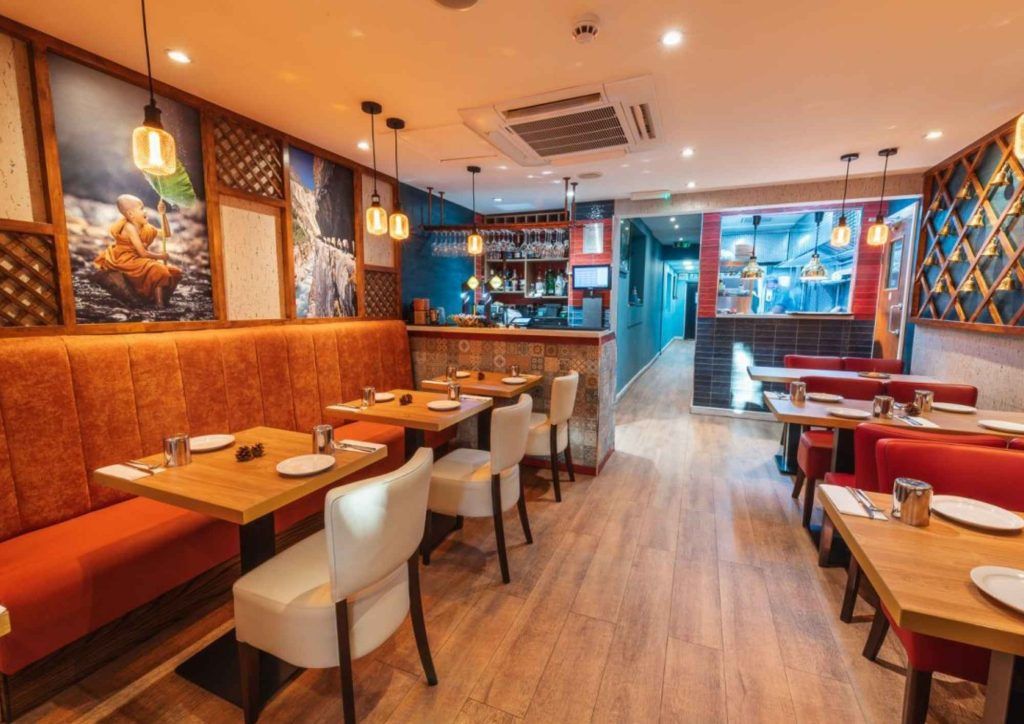
If you’re interested in trying an authentic Thakali Thali, you’ll find several Nepalese restaurants across Manchester. Among them, Durbar Square stands out as a great place to experience this traditional Nepali set meal. Located in Didsbury, Manchester, our restaurant offers a full Nepali restaurant menu. If you’re planning your first visit, you can explore our Thakali Thali options at reasonable prices, making it accessible to both first-time diners and those already familiar with Nepali cuisine. here, you can choose from different Thakali Thalis to suit your preference:
Chicken Thakali Thali is a tender chicken curry cooked in the Thakali style, with Himalayan herbs and a balanced spice blend. Served with steamed rice, jimbu dal, seasonal vegetable curry, sautéed greens, tomato achar, and ghee. A generous, satisfying meal that gives you the full Thakali experience.
Slow-cooked lamb in a rich, aromatic gravy that deepens in flavour the longer it cooks. Paired with the same full set of accompaniments. The meat is bold but not overpowering, and it pairs beautifully with the lighter elements on the plate.
A perfect for vegetarian veg thakali thali is a complete plant-based set meal built around seasonal vegetables, two or three tarkari, jimbu dal, saag, and multiple achars. Every bit as substantial as the meat versions, and a wonderful introduction to Thakali cuisine for vegetarians or anyone looking for something wholesome.
Thakali Thali is more than just a normal meal because it is a record of where the Thakali people came from, how they lived, and what they believed about feeding people well. Born in the mountain trade routes of Mustang, refined in roadside bhatti inns, and carried outward by a community known for its cleanliness and hospitality, the Thakali Thali became Nepal’s benchmark for what a complete meal should be.
Each and every item on the plate of thakali thal is for a good reason. The jimbu dal adds the taste of the Himalayas to the plate. The timur potato provides the fiery taste of the mountain regions. The various pickles are a part of a preservation culture.
Ready to Experience an Authentic Thakali Thali?
If you have never tried a Thakali Thali, the best thing to do is sit down to one in Durbar Square and find out what Nepal’s most complete meal tastes like.
Thakali Thali is earthy, aromatic, and deeply satisfying. The flavors move between savory, sour, bitter, and lightly spiced across the different components. The jimbu-tempered dal has a distinctive Himalayan fragrance. The timur in the potato curry gives a gentle citrusy heat. The pickles add sharpness and contrast. It is a mild meal in terms of chilli heat but complex in flavour.
A traditional Thakali Thali includes between six and ten components: rice or dhido, lentil soup (dal), one or two vegetable curries, sautéed leafy greens, two to three types of achar (pickle), ghee, papad, and a meat curry for non-vegetarian options.
Thakali Thali is not as spicy as many Indian curries. The heat comes mainly from dried chili in the pickles and from timur (Nepali Sichuan pepper), which gives a citrusy, numbing sensation rather than aggressive heat. The overall flavor profile is balanced and aromatic rather than fiery.
Dal Bhat is Nepal’s everyday household meal: rice, lentil soup, one vegetable curry, and one pickle. Thakali Thali is a more refined, structured version of the same concept with multiple vegetable dishes, two to three types of achar, a distinctive jimbu-tempered dal, ghee on rice, and a meat curry option. The key differences are variety, precision, and the hospitality tradition behind its service.
Yes. A Veg Thakali Thali replaces the meat curry with additional vegetable dishes, making it a complete and satisfying plant-based meal. The rest of the thali, including the dal, rice, greens, pickles, and ghee, is naturally vegetarian.

