Some cuisines announce themselves loudly. Nepalese food doesn’t. It earns your attention slowly, through smoky grilled meats, warming broths, handmade dumplings, and flavours that feel both familiar and completely new.
Most people discover traditional Nepalese food through momos. That’s a great start. But popular Nepalese dishes stretch far beyond dumplings, into fermented greens, festival sweets, charcoal-grilled street food, and ancient rice crepes that have fed communities for centuries.
If you’ve been sleeping on authentic Nepalese cuisine, this guide is your wake-up call.
Nepal draws culinary influence from three directions: India to the south, Tibet and China to the north, and its own indigenous Newari traditions at the centre.
High-altitude living shaped the cooking. Communities needed warming, filling, and preserving foods to survive harsh mountain winters. That’s why fermented ingredients, wood-fire cooking, and hearty broths appear across so many Nepalese dishes.
The food also feels lighter than typical curry-house meals. Less cream, less butter, more freshness and balance. And meals are communal by nature. You share plates, pass dishes around, and take your time. That spirit of generosity shows up in every bite.
Momos are the heartbeat of Nepalese street food. These handmade dumplings are filled with minced chicken, vegetables, or buffalo meat, seasoned with garlic, ginger, and spices, then sealed by hand.
They can be steamed, fried, or cooked “kothey” style, pan-fried on one side and steamed on the other. They’re always served with momo achar, a smoky tomato dipping sauce made with sesame and chilli.
The filling is juicy. The wrapper is soft and delicate. The achar is sharp and fiery. Together, they’re very hard to stop eating. Momos have Tibetan roots but are now deeply woven into Nepalese culture and are increasingly popular in Manchester restaurants too.
Sekuwa is Nepal’s answer to barbecue, and it’s completely its own thing.
Meat, usually chicken, goat, or buffalo, is marinated for hours in mustard oil, ginger-garlic paste, yoghurt, cumin, and Timmur pepper. Timmur is a native Himalayan spice with a citrusy, numbing quality you won’t find in tikka-style dishes. After marinating, the meat is grilled over charcoal until smoky and charred on the outside and juicy within.
Served with chiura (beaten rice) and a sharp achar on the side, sekuwa is rustic, direct, and full of mountain character. No heavy sauces. Just honest cooking over fire.
There’s a saying in Nepal: “Dal bhat power, 24 hours.”
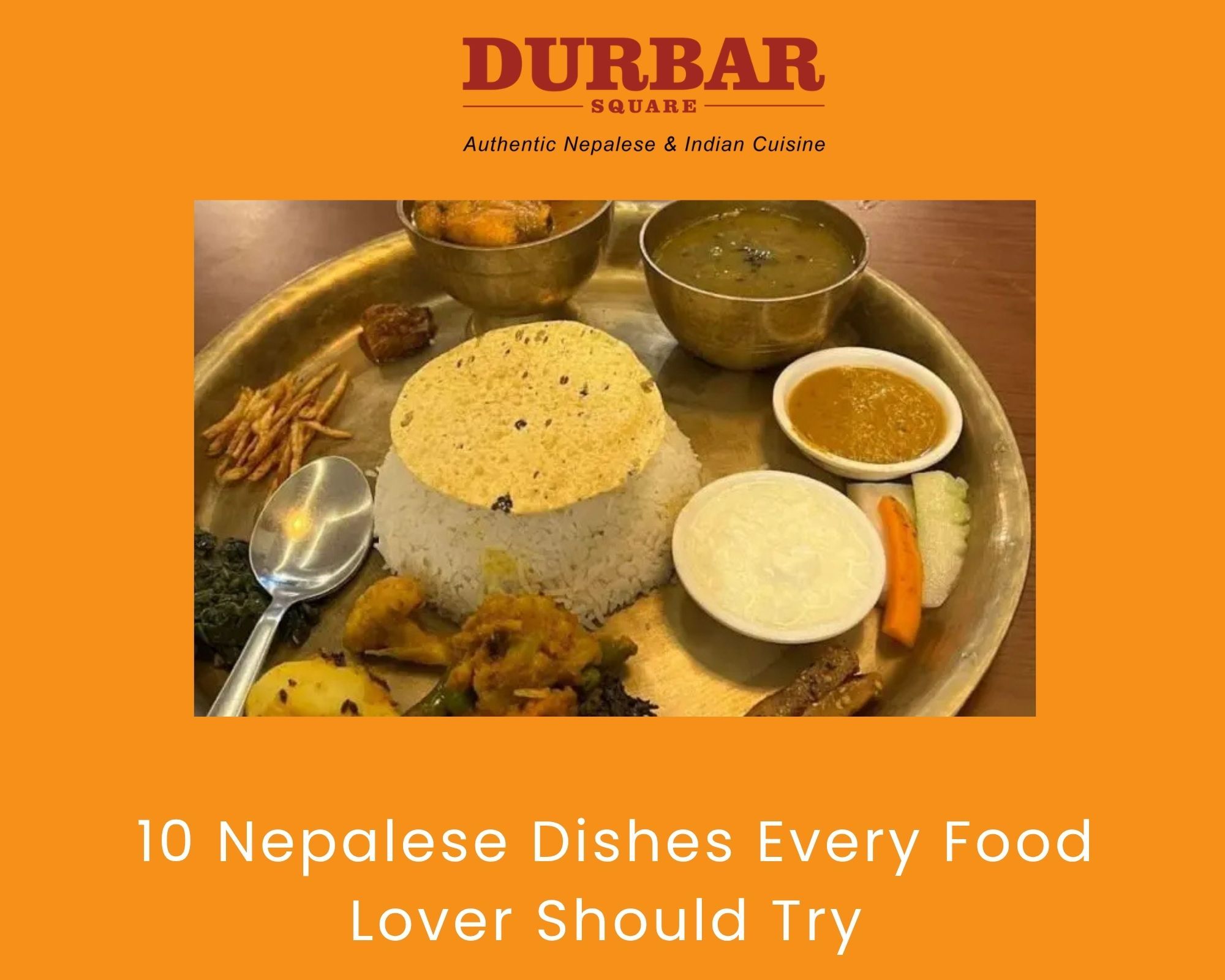
Dal bhat is steamed rice served with lentil soup and a spread of sides: vegetable curry, homemade pickle, papad, and sometimes yogurt. The lentils are gently spiced. The rice is neutral and fluffy. The sides add brightness and crunch.
What makes it special is that it’s different every time. Every household and region makes it slightly differently. It’s nutritionally complete, culturally central, and the national dish of Nepal for good reason.
Thukpa is what happens when Tibetan warmth meets Nepalese spice.
This noodle soup has a clear, warming broth made with garlic, ginger, and gentle spices. Thick egg noodles, vegetables, and usually chicken or meat sit inside. The result is satisfying but never heavy.
Thukpa has no real equivalent in Indian cuisine. It fills a different kind of hunger, the kind that comes from cold weather and a need for something that warms you from the inside out.
Chatamari belongs to the Newar community, the original inhabitants of the Kathmandu Valley, and it dates back centuries.
The base is a thin crepe made from rice flour batter, cooked on a flat pan. While it sets, toppings are added directly: minced meat, egg, onions, coriander, and Nepalese spices. It’s cooked from one side only, giving it a soft, layered texture.
People call it “Nepali pizza,” but that comparison undersells it. Chatamari is far older and far more culturally rooted. It’s part of Newar festivals, ceremonies, and everyday meals. A sweet version topped with sugar also exists, and both are worth trying.
Yomari surprises most people the first time they taste it.
It’s a steamed dumpling made from rice flour, shaped into a teardrop or cone, and filled with chaku: jaggery, roasted sesame seeds, and sometimes ghee or cardamom. Once steamed, the outer shell turns soft and slightly chewy. The inside melts into warm, nutty sweetness.
Yomari is central to the festival of Yomari Punhi, celebrated on the full moon in November or December, marking the end of the rice harvest. The name comes from Newari words meaning “bread that people love.” The cultural roots go back to the 6th century. It’s much more than a dessert.
Choila makes an immediate impression.
Traditionally made with buffalo meat, though chicken is now common, Choila is grilled over a fire and then tossed in a bold spice dressing of mustard oil, garlic, ginger, dried red chillies, lemon juice, and Timmur. Fenugreek seeds are charred in the hot oil, adding a deep, smoky bitterness that is completely unique.
Choila is not a curry. It’s closer to a smoky meat salad, served at room temperature with chiura (beaten rice). It’s part of the Samay Baji, the traditional Newari ceremonial platter. Bold, spicy, and deeply flavoured, it’s one of the most distinctive dishes in the Nepalese repertoire.
Gundruk might be the most culturally important dish on this list that most UK diners have never encountered.
Mustard greens, radish tops, or cauliflower leaves are fermented for several days, then sun-dried and stored. The result is a tangy, sour, umami-rich ingredient that lasts for months without refrigeration. This preservation technique was developed in Himalayan communities where fresh vegetables were scarce during winter.
Gundruk is typically served as Gundruk ko jhol, a warming soup cooked with mustard oil, garlic, onions, tomatoes, and spices. The broth is sour, deeply savoury, and rich with natural probiotics. For the Nepalese diaspora around the world, a bowl of Gundruk soup is a direct link back to home.
Sel Roti is a ring-shaped bread made from rice flour, sugar, cardamom, and cloves. The batter is poured in a circular motion into hot oil and fried until golden and crisp. The outside is crunchy. The inside is soft and slightly sweet with a warm spice note.
In Nepal, Sel Roti is made during major festivals like Dashain and Tihar, usually in large batches by hand. The smell of it frying is one of those sensory memories Nepalese people carry with them everywhere. It’s traditionally eaten with tea or alongside savoury dishes like potato curry and pickled vegetables.
Don’t confuse this with your local Chinese takeaway. They share a name, but the similarities stop at the noodles.
Nepalese chowmein is stir-fried noodles tossed with onions, cabbage, peppers, eggs or meat, and a blend of local spices. The mustard oil base adds earthy depth. Timmur adds a citrusy tingle. Fresh coriander adds brightness. It’s punchy, fast, and full of character.
In Kathmandu, it’s sold fresh from roadside woks at every hour of the day. In Manchester, it’s one of those dishes that consistently surprises people expecting something more familiar.
Manchester diners are increasingly looking beyond standard curry-house experiences. They want regional food with a real story behind it.
Nepalese cuisine fits that appetite perfectly. The UK has seen a steady rise in Nepalese restaurants, and South Manchester, particularly Didsbury, has become a hub for authentic Himalayan food. Momos have become a social dish worth sharing and talking about. The communal, generous nature of Nepalese dining fits naturally with how people in Manchester love to eat.
Whether you’re trying momos for the first time or exploring deeper into Nepalese flavours, Durbar Square in Didsbury is a great place to start.
Located on Wilmslow Road, Durbar Square serves traditional Nepalese dishes alongside classic Indian food. The kitchen is led by Chef Hom Nath, with over 13 years of experience cooking across Kathmandu and Manchester.
The momos are freshly made and paired with house-made achar. The menu also features Gorkhali lamb, Thukpa, and options for vegetarians and vegans.
The atmosphere is warm and relaxed. The food is honest. And you’ll almost certainly order more momos before the evening is done.
Momos are a brilliant starting point. But authentic Nepalese cuisine is so much bigger.
It’s the smoky boldness of Choila at a Newari feast. The tangy warmth of Gundruk soup on a cold evening. The quiet sweetness of Yomari at a festival.
The grounding simplicity of Dal Bhat shared between friends. Nepalese food offers comfort, flavour, tradition, and a dining experience that feels genuinely different. Once you start exploring it, you won’t stop at dumplings.
And if you want to experience authentic Nepalese and Indian Flavor, Durbar Square is your go-to place.
Dal bhat is Nepal’s national dish, eaten by almost everyone every day. Momos are the most popular street food and the dish most associated with Nepalese food internationally.
Nepalese food is flavourful rather than intensely hot. Spices build warmth and depth, not heat for its own sake. Most dishes can be adjusted to suit your preference.
Momos are made from a simple flour and water dough, filled with seasoned minced meat or vegetables, sealed by hand, and served with a tomato-based dipping sauce called achar.
Traditional Nepalese food includes dal bhat, momos, sekuwa, thukpa, gundruk, sel roti, chatamari, choila, and yomari. The cuisine draws from Tibetan, Indian, and Newari traditions.
They share some spices, but Nepalese food is lighter, less cream-heavy, and shaped by Himalayan and Tibetan traditions. Dishes like gundruk, thukpa, chatamari, and yomari have no Indian equivalent.
Durbar Square in Didsbury serves traditional Nepalese dishes including momos, Gorkhali lamb, and Thukpa. Led by Chef Hom Nath, it’s one of the best spots in South Manchester for authentic Himalayan flavours.

