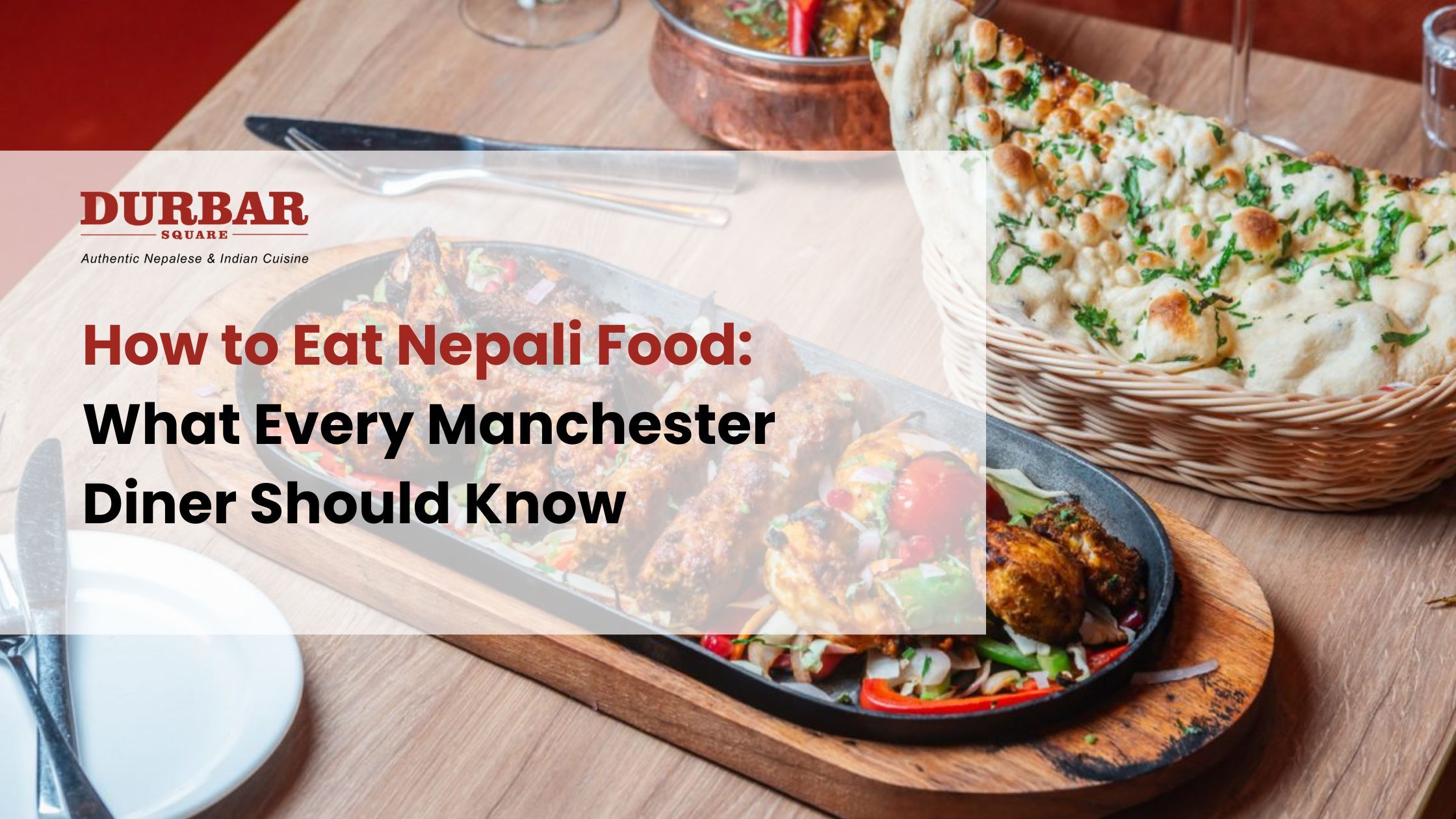
Let’s say you are going to a Nepalese restaurant for the first time in Manchester. The food smells amazing, everyone around you appears to be completely relaxed, and then you are confused about whether to use a fork or simply use your hands while thinking, What might happen if you get something wrong in front of everyone?
That little “wait, what do I do?” moment happens to almost every first-time diner. And it is easy for that small worry to grow bigger in your head; you might start thinking you will look silly or accidentally offend someone because in Nepal food isn’t just something you eat to fill your stomach; it is tied to respect, family, and centuries of tradition, so not knowing the local eating customs in a Nepalese restaurant in Manchester can feel more stressful than it needs to be.
The good news is that Nepali dining is much simpler than it looks. If you are wondering how to eat Nepali food, we will walk you through everything you need to know, from eating with your hands to basic table manners, so you can relax and enjoy the experience without any kind of worry.
Before eating in a Nepalese restaurant, it is helpful to understand a few simple dining customs. These unwritten traditions are all about showing respect for the food, the cook, and the people you are sharing the meal with, not about following strict rules.
Every culture has its own eating traditions. In the West, it is considered disrespectful to talk with your mouth full; in Nepal, the customs are a little different, but just as easy to pick up once you understand the reasoning behind them.
Nepalese food norms generally include:
None of this is complicated once you know the “why”, and that’s exactly what we will break down next.
No, it is not rude to eat with your hands in Nepal; it is one of the oldest and most respected eating customs in the country, and most families still eat this way at home every single day. The proper way to eat Nepalese food, according to tradition, centres on using the right hand, a practice still observed in the vast majority of Nepali households today.
This is probably the biggest question people have, so let’s clear it up:
It is less a strict, punishment-style rule and more a habit passed down through generations, the same way you were probably taught to say “please” and “thank you”.
Here is a cultural detail most first-time visitors don’t know: in Nepal, once food touches your mouth or your plate, it becomes what’s called “jutho”, meaning it is now considered used, or impure, for anyone else.
This is why:
It sounds strict on paper, but it is actually a thoughtful, centuries-old way of keeping meals clean and hygienic for everyone at the table long before germs were ever discussed scientifically.
To experience these dining traditions firsthand, discover what makes Thakali Thali Nepal’s most complete traditional meal.
Traditional Nepali dining manners look a little different depending on whether you are eating at someone’s home or out at a restaurant.
| At Someone’s Home | At a Restaurant | |
| Who’s served first | Elders and guests, always | No fixed order; everyone orders as they like |
| Eating with hands | Common and expected | Optional; cutlery always available |
| Asking for more | A compliment to the cook | Just a normal top-up request |
| Portion size | Often more than you can finish – that’s hospitality | You order what you want |
| Learning the customs | Watch and follow your host | Watch other diners, or simply ask staff |

So, how do Nepalese eat on a normal day? The answer is simpler than you might think.
Most families eat dal bhat, a plate of rice, lentil soup, vegetable curry, and sometimes meat or greens twice a day, once in the late morning and again in the evening. Meals are usually served on one large plate, and asking for refills is completely normal, since seconds (and even thirds) are seen as a genuine compliment to the cook.
A typical Nepali plate includes:
Learn more about traditional Nepali dishes in our guide to 10 Nepalese Dishes Every Food Lover Should Try at Least Once.
This daily rhythm is a core part of Nepalese food culture. Meals aren’t rushed; they are shared and regarded as one of the most important. They are shared rather than something squeezed between other tasks.
How to Eat Nepali Food the Traditional Way
Ready to actually try it yourself? Here is exactly how to eat Nepali food the traditional way, step by step:
These Nepali dining rules may appear unfamiliar at first, but they will quickly become second nature. And the best part? Nobody expects you to be perfect the first time. Even locals smile warmly when they see someone new giving it a shot, because the effort is regarded as a mark of respect.
If it is your first time at a Nepalese restaurant, take a breath; you are going to be just fine. Here is what to expect at a Nepalese restaurant, so nothing catches you off guard:
Not sure what to actually order once you are there? Pair this guide with our Beginners’ Guide to Nepalese Cuisine: What to Order on Your First Visit for the full picture of what to order and how to eat it once it arrives.
At the end of the day, Nepali dining customs are about so much more than just table manners. They are about connection to family, to history, and to home.
For Nepali families living abroad, including many right here in Manchester, keeping these Nepali cultural and food traditions alive is a way of holding onto a piece of home, even thousands of miles away. Every time someone eats dal bhat with their right hand, passes a plate the traditional way, or serves an elder first, they are keeping a centuries-old story going.
Now, you definitely have a clear idea of what to expect while eating the Nepali cuisine. Whether you are sharing a meal in Kathmandu or in Manchester, you can sit down without hesitation, enjoy every bite, and enjoy the rich culture associated with Nepalese dining.
Ready to Experience It for Yourself?
Experience the true taste of Nepal at Durbar Square
Eating with your hands is a centuries-old tradition in Nepal. It is part of cultural values, family customs, and a more mindful approach to eating. Many people feel that it enhances the dining experience, as they are able to appreciate the texture and temperature of each mouthful more.
No, it is not rude at all. Eating with the right hand is a respected tradition in Nepal, practised by families every single day.
“Jutho” refers to food or objects that become impure once they have touched someone’s mouth or plate, which is why sharing bites isn’t traditional.
Not at all. Cutlery is always available, and nobody will think twice if you would rather use a fork and spoon.
Just relax, ask questions if you are unsure, and know that curiosity about the food and customs is always welcomed.

